
Chemistry

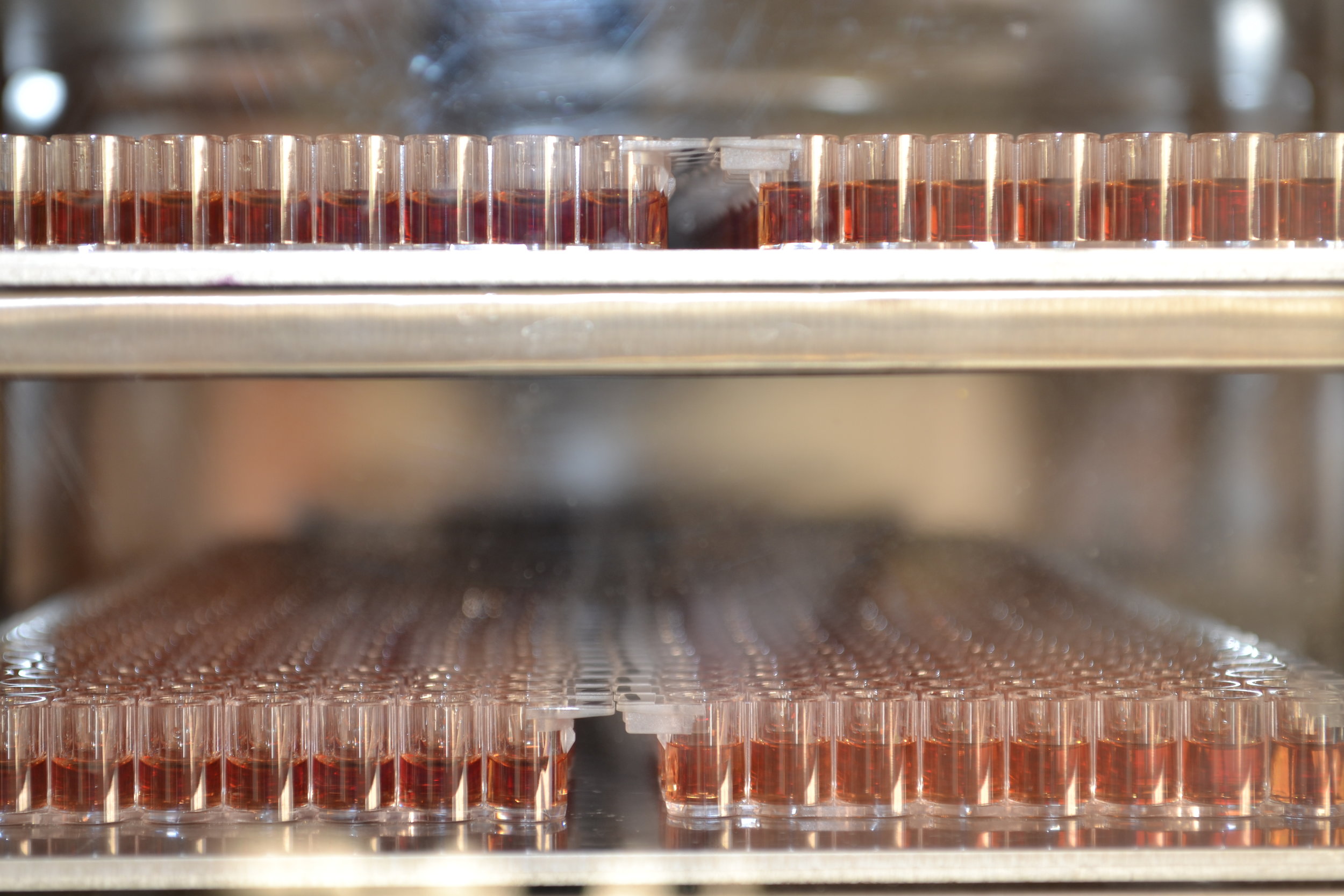
The Water Lens test kit utilizes several independent detection motifs in a 96-well plate format. Each 8-well strip (12 strips to a plate) is filled with a different assay, each of which contains a colorimetric dye (and other constituents) sensitive to the presence of the component being measured. The assays are then freeze-dried, which provides for a long shelf life (even in harsh environments) and rapid rehydration upon introduction of the sample. The tests have all been carefully formulated to be compatible with high TDS and TSS produced waters found in industries such as oil and gas, mining, industrial, waste water, and agriculture.
The Water Lens test kit operates on the principle of colorimetric absorption by photosensitive dyes. When the dyes bind to their respective analytes, the photometric spectrum of the dyes change. These changes are read by monitoring the absorbance of light at specific wavelengths as light passes through the sample. The absorbance characteristics are read by a colorimeter, and the data generated is used to calculate the concentration of the particular analyte in the sample using proprietary Water Lens software.
current parameters
Acetates & Formates
Alkalinity
Barium
Bicarbonate
Boron
Calcium
Carbonate
Chlorides
Chlorine (Free)
Conductivity
Dissolved CO2
Hydrogen Sulfide (H2S)
Hydroxide
Iron (Total dissolved, II and III)
Langelier Saturation Index (LSI)
Larson-Skold Index
Magnesium
Peracetic Acid (PAA)
pH
Phosphate
Potassium
Resistivity
Skillman Index
Sodium
Specific Gravity
Stiff & Davis Stability Index (S&DSI)
Sulfate
Sulfide
Total Dissolved Solids (TDS)
Total Hardness
Turbidity
under development
Acid Producing Bacteria (APBs)
Ammonium
Arsenic
BTEX
Chlorine (Total)
E.coli*
Fluoride
Legionella
Listeria
Manganese
micH*
Nitrate/Nitrite
Organic Acids
* In Beta testing
Phosphonate
Salmonella
Silicate
Strontium
Sulfate Reducing Bacteria (SRBs)
Zinc